
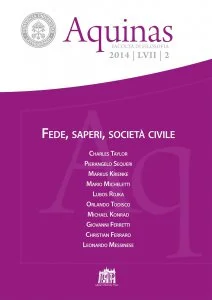
Descrizione
Estratto
Plantinga parla di una credenza basilare nelle affermazioni teistiche iniziali. Il fatto che nella definizione della basilarità entra il sensus divinitatis diventa problematico per i non credenti. Considerando diverse difficoltà, sembra che la filosofia cristiana dovrebbe essere basata piuttosto sul principio di credulità. Un credente è giustificato nel credere a tutto come a un’«ipotesi di lavoro» fino a quando non emergono ragioni contrarie. Il principio di credulità non causa difficoltà con la «testimonianza interiore» e sensus divinitatis, ed è accettato in tutti i campi di ricerca scientifica. Il suggerimento del metodo abduttivo o trascendentale implica che la teologia filosofica tradizionale diventa irrilevante, che significa la fine del rinnovato interesse per i temi tradizionali della teologia filosofica (sistematica). Il problema è che nel contesto di secolarismo ed ateismo contemporaneo, ci vuole un impegno più radicale da parte dei filosofi cristiani per sostenere le loro tesi principali. Oggi non è sufficiente avere il diritto di fare la nostra filosofia cristiana o che la nostra filosofia possa arricchire altri filosofi, ma esiste il bisogno urgente di provare chiaramente che alcune posizioni filosofiche dei nostri colleghi atei sono assurde, sbagliate e/o illusorie.
Parole chiave:
credenza; teismo; teologia filosofica; filosofia analitica; Dio
Abstract
Plantinga speaks of a fundamental belief in initial theistic claims. The fact that in the definition of what constitutes fundamental, the sensus divinitatis has a place, becomes problematic for non-believers. Considering various difficulties, it seems that the so-called Christian philosophy should be based rather on the principle of credulity. A believer is justified in believing in everything as a «working hypothesis» until contrary reasons arise. The principle of credulity does not cause difficulties with the «inner witness» and sensus divinitatis, and is accepted in all fields of scientific research. The suggestion of an abductive or transcendental method implies that traditional philosophical theology becomes irrelevant, and this spells the end of the renewed interest in traditional themes of philosophical (systematic) theology. The problem is that in the context of contemporary secularism and atheism, it takes a more radical commitment by Christian philosophers to support their main theses. Today it is not enough to have the right to make our Christian philosophy, or that our philosophy can enrich other philosophers, but there is an urgent need to clearly prove that certain philosophical positions of our fellow atheists are absurd, wrong and/or illusory.
Keyword:
belief; theism; philosophical theology; analytic philosophy; God

Recensioni
Ancora non ci sono recensioni.